Reviews: "Love the newsletters! Keep them coming" Janice Fleming...MORE REVIEWS


Scuba News RSS Feed 
SCUBA News 314
(ISSN 1476-8011)
September 2026
This month, updates on diving Chuuk Lagoon and Barbardos, new liveaboard deals plus a closer look at the pantropical spotted dolphin and its continuing conservation challenges. And, as always, I round up the latest marine-life discoveries and environmental news from around the world.
Contents:
What's new at SCUBA Travel?
Liveaboard deals & destinations
Creature of the month is the Spotted Dolphin, Stenella attenuata
Diving news from around the World
You can download SCUBA News as a pdf.


What's New at SCUBA Travel?
|


Liveaboard Deals and Destinations
Handpicked offers to save you money on liveaboard trips.
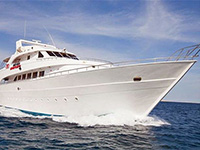
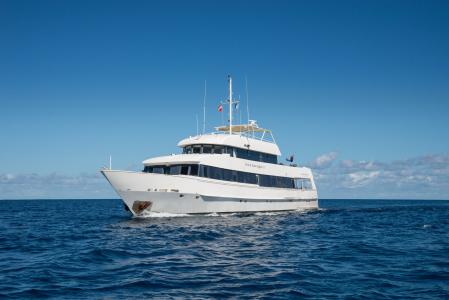
- Turks & Caicos Explorer II, SAVE UP TO 43%. Price from $3,495 $1,995 per trip per person. A 20-guest boat exploring the walls and reefs of Turks and Caicos. Also offers trips to Silver Bank in the Dominican Republic and snorkelling with humpback whales.
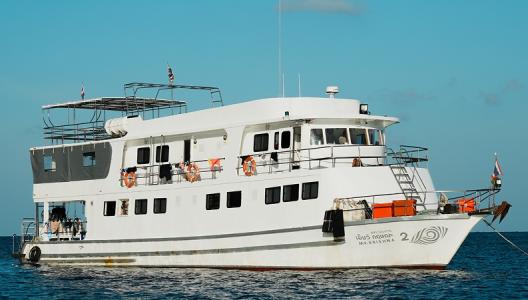
- Krishna 2, Thailand SAVE 20%. Dive the southern Andaman Sea, including what I consider two of the best dives in Thailand: Hin Daeng and Hin Moang. 6 days from just £569!
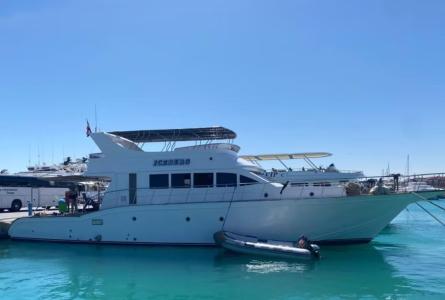
- Iceberg, Egypt. Just 8 guests on this intimate wooden mini-safari boat exploring the northern Red Sea. Price from £456 per 5-day trip.
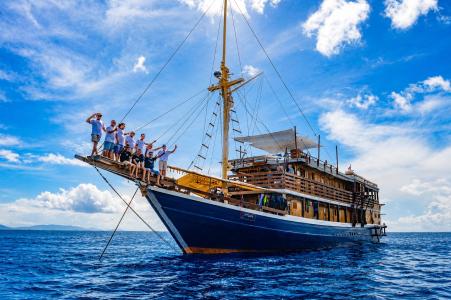
- Mari, Indonesia. Diving the fabulous Triton Bay, Misool and Raja Ampat. A maximum ratio of 4 divers to 1 guide keeps dive groups small. 12% off 13-day trips in November and December 2026.
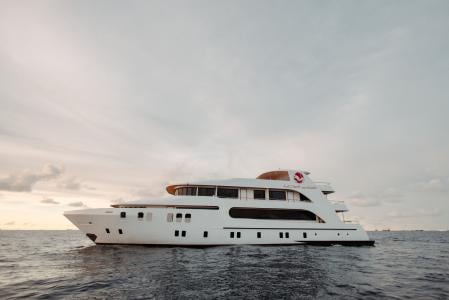
- Adora, Maldives. SAVE 20% in 2026, 10% in 2027. Non-divers can join the cruise and take part in snorkelling or an introduction to scuba diving. Time away from diving may include island hopping, sandbank visits, island visits, island barbecues, and a picnic on an uninhabited island. Children are welcome.
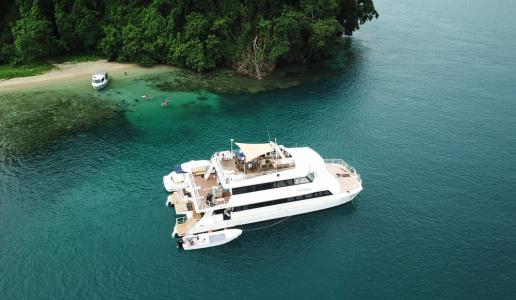
- Oceania, Papua New Guinea, SAVE 40%. Price from $4,990 $2,994 per trip per person. A small, intimate catamaran taking just 16 guests in 8 cabins to the coral-rich reefs and shark-filled waters of Kimbe Bay. West New Britain Itinerary, 3 Dec 26.
Spotted Dolphin - Stenella attenuata
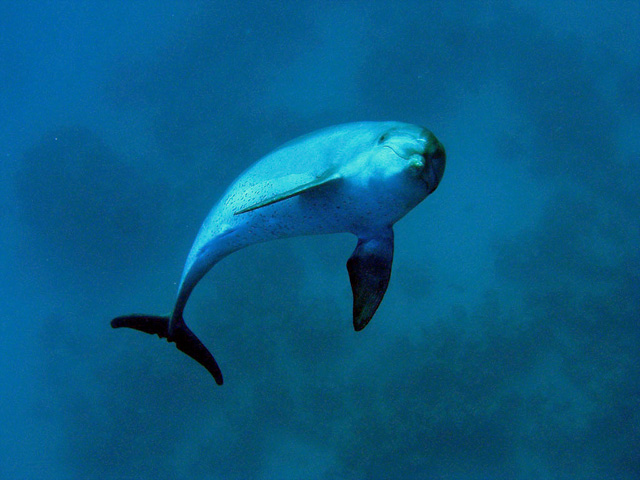
There are two types of spotted dolphin, the Atlantic and the Pantropical. We are concentrating today on the Pantropical, Stenella attenuata, found in the tropical and subtropical waters of the Atlantic, Pacific and Indian Oceans, including the Red Sea.
Tim Nicholson
Victims of Tuna Fisheries
Spotted dolphins often swim with yellowfin tuna. Sadly, this means that they are the species to have suffered the most as bycatch in the purse seine nets of the tuna fishery. Tuna fishermen used to watch for the dolphins, then set their nets and encircle both dolphins and tuna, killing dolphins in the process. Historically, millions of dolphins have been killed in
this way, with the spotted dolphin accounting for 80% of the casualties.
The bycatch, though, has reduced from hundreds of thousands per year in the 60s and early 70s to around a thousand dolphins a year now. Much better, but still too many.

Taken in the Red Sea by Tim Nicholson
The fishers are still catching many dolphins in their purse seine nets but now employ methods to release them. For example, backing the ship up to release the dolphins, and if this does not work having swimmers manually release them. This can cause stress to the dolphins and lead to separation between mother and calf. In many dolphin schools encircled by nets, the calves are missing. Because the fishing chase is a fast-moving, chaotic environment it may be difficult for mothers and calves to maintain their normal swimming positions. Fishing has also been shown to reduce reproductive rate.

Tim Nicholson
Different diets for mothers
Spotted dolphins feed on many varieties of fish and squid found near the surface of the water. Pregnant females prefer squid, nursing mothers fish.
Females reach maturity between 6 and 8 years of age or when the animal is about 2 m long. Males take longer to mature, between 10 and 14 years. The dolphins mate and calve throughout the year. Pregnancy lasts 11.5 months and then the mothers nurse their calves for 11 or more months.
Young spotted dolphins are playful and leap high into the air out of the water.
They are not spotted at birth: the spots appear as they grow older.

Tim Nicholson
Where to see them
In warm water around the world, especially the Bahamas and the Eastern Tropical Pacific. A dolphin encounter underwater is a really memorable experience. But everyone loves to see a dolphin, whether on or beneath the surface.
Sources and References:
American Cetacean Society Fact Sheet
Hohn, A.A. et al (1985), Reproductive maturity and seasonality of male spotted dolphins, Stenella attenuata, in the eastern tropical Pacific. Marine Mammal Science, 1: 273-293.
Toshio Kasuya et al, Growth and reproduction of Stenella attenuata in the Pacific coast of Japan, Ocean Research Institute, University of Tokyo
Ballance et al, A History of the Tuna-Dolphin Problem: Successes, Failures, and Lessons Learned 2021 Frontiers in Marine Science
Dolphin Talk - what are they saying?, Poppy Reay-Robinson
Dolphins and humans have similar personality traits, Jill Studholme
Class > Mammalia, Order > Cetacea, Suborder > Odontoceti, Family > Delphinidae, Genus > Stenella, Species > Stenella attenuata
Diving news from around the World
|
|
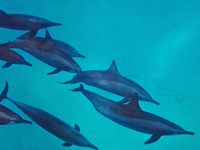
Bird flu jumps to dolphins in Australia
|
|
|
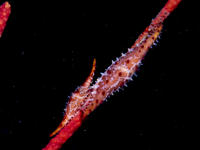
Sea dragon populations decimated in mind-blowing mass mortality event caused by South Australian algal bloom
|

|
|
Yellowbar angelfish invades Brazil
|

|
|
Scientists call for emergency measures to save sea life from El Nino
|

|
|
Can we stop ships from killing the Mediterranean's last great whales?
|

|
|
Offshore wind may be good for the climate but can it be good for the ocean, too?
|

|
|
Three-year project to lift lid on Britain's little-understood sharks
|

|
|
Climate change won't simply shrink marine life
|
|
|
Probiotic and postbiotic treatments revive heat-stressed corals
|

|
|
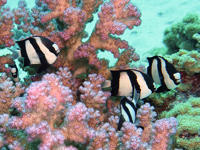
Damselfish-assisted repair of wounded corals surprises scientists
|
|
|
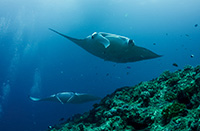
Manta Rays, Marine Parks and Your Next Dive Holiday: What New Research from Nusa Penida Means for Divers
|
SCUBA News is licensed under a Creative Commons Attribution 4.0 Unported License. This means we are happy for you to reuse our material for both commercial and non-commercial use as long as you: credit the name of the author, link back to the SCUBA Travel website and say if you have made any changes. Most photos though, are copyright the photographer. Please get in touch for details.
Photo credits: Tim Nicholson, Jill Studholme, Kelly Wong Johnson, Pete McGee/CC BY-NC 4.0, DepositPhotos, divebooker.com
UNSUBSCRIBING
Visit {?$optout_link?} to remove yourself from the mailing list. Any problems
contact [email protected].
ADVERTISING
Should you wish to advertise in SCUBA News, please
see the special offers at
https://www.scubatravel.co.uk/newsad.html
Other advertising opportunities are at
https://www.scubatravel.co.uk/diving-advertising.html
CONTACTING THE EDITOR
Please send your letters or press releases to:
Jill Studholme
SCUBA News
The Cliff
DE6 2HR
UK
[email protected]
SCUBA News (ISSN 1476-8011)
Every month we send out a free newsletter featuring the best diving areas, underwater life, diving book reviews and interviews with authors. To receive this please fill in your e-mail address below. For an archive of previous issues see the SCUBA News page.