Reviews: "Love the newsletters! Keep them coming" Janice Fleming...MORE REVIEWS

Scuba News RSS Feed 
SCUBA News 312
(ISSN 1476-8011)
July 2026
Welcome to this month's edition of SCUBA News, in which we travel to Turkey and Dominica, take a close-up look at the shell-swapping life of Dardanus Hermit Crabs and round-up the best liveaboard deals with savings of up to 50%. Plus, as always, read the diving and underwater news.
Contents:
What's new at SCUBA Travel?
Liveaboard deals & destinations
House hunting with friends: the life of Hermit Crabs
Diving news from around the World
You can download SCUBA News as a pdf.


What's New at SCUBA Travel?
|


Liveaboard Deals and Destinations
Half price on Manta madness in the Maldives and 40% off the iconic wreck dives of Truk Lagoon - just two of the offers we have for you today.
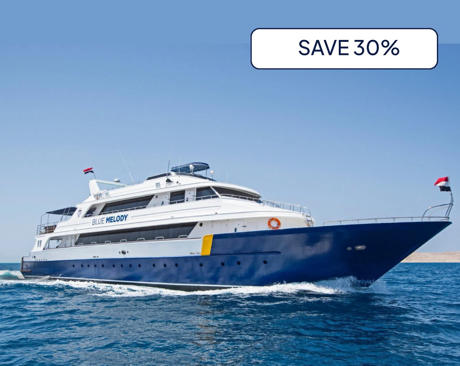
- Blue Melody, Egypt, Northern Wrecks and Reefs. SAVE 30% August until March 2026. Choose from northern wrecks and reefs, Brothers, Daedelus and Elphinstone.
- Horizon 3, Maldives. 50% Off. Hanifaru Bay Manta Madness in August and September 2026. The reef at Hanifaru Bay is shaped like a funnel. Plankton get trapped in the funnel which attracts whale sharks and manta rays - the world's largest feeding station.
- Ilike, Indonesia. SAVE 30% on 11 day trips in the fabulous Komodo - my all-time favourite place to dive.

- Danubio Azul, Galapagos, SAVE 18% on August trips. A small liveaboard, the Danubio Azul can accommodate up to 16 guests across its 9 cabins. Expect hammerheads, Galapagos sharks, silky sharks, tiger and whale sharks
- The Junk, Thailand, SAVE 20% - dive the Similan and Surin islands from this beautiful, teak wood, boat.

- Vivax, Malpelo, Save 10%. Only one boat is permitted in the marine reserve at a time, for a remote, exclusive, diving experience.
- Truk Lagoon, Pacific Master. 40% off diving the wrecks of Truk Lagoon (Chuuk Lagoon) from December 'til May.



House hunting with friends: the life of Dardanus Hermit Crabs
Hermit crabs plod about the sea-floor using someone else's shell for a home. They always use empty shells and never kill the original occupant.

Red Hermit Crab, Dardanus arrosor, taken in the Azores by Tim Nicholson
When the crab becomes to large for its shell, it looks for another. On finding a likely looking one, it tries it on for size. If it isn't pleased with the fit, or the shell is too heavy, the crab returns to its old castoff and continues it search. It may try the old and new several times before it makes its decision.
Where there is a large population of hermit crabs and a shortage of shells, the crab will accept a sub-standard home: maybe a cracked or uncomfortable shell. But in good conditions it will be very particular about the new shell it chooses. For particularly good shells, two hermit crabs will fight for possession. Some will even attack an inhabitant to steal it's particularly desirable abode. These fights don't tend to damage the combatants, probably due to complex ritualised fighting

Anemone Hermit Crab, Dardanus pedunculatus, taken in the Red Sea by Tim Nicholson
Many individuals have to settle for shells that are either too large or too small. A too small shell may result in the crab actually getting smaller after moulting, with a reduction in egg numbers. Too large renders the crab more susceptible to predators and imposes an additional energy load from the extra weight to be carried.
Sea anemone "friends"
Some of the Dardanas species of Hermit crab stick sea anemones on their shells. Sometimes the anemone assists with the process, loosening their connection to the substrate to ease transfer. The aneomone camoflauges the crab and its stinging cells may protect the crab from predators such as octopus.

Anemone Hermit Crab, Dardanus pedunculatus, taken in the Philippines
by Andy/CC BY-NC 4.0 via iNaturalist
The anemone also benefits from the arrangement. It becomes effortlessly mobile and shares the crab's meals. The crab will also defend the anemone from predators trying to eat them. It's even possible that the hermit crab feeds the anemone directly.
Night dives in temperate and tropical water
Dardanas species are nocturnal with dark-adapted eyes. Look out for them on night-dives. They live in the Indian, Pacific and Atlantic oceans and the Mediterranean Sea.

Anemone Hermit Crab, Dardanus pedunculatus, taken in Bali
by DiverCraig/CC BY-NC 4.0 via iNaturalist
Phylum: Arthropoda > Subphylum Crustacea Class: Malacostraca > Order: Decapoda (10 legs) > Infraorder: Anomura (reduced/hidden last legs) > Genus: Dardanus
Sources and References
Karplus, I. The partnerships between hermit crabs and sea anemones: an overview. Symbiosis 93, 1-15 (2024).
Chryssanthi, Antoniadou et al. (2013). Symbiosis of Sea Anemones and Hermit Crabs in Temperate Seas.
Invertebrate Zoology, Fox, Ruppert and Barnes, ISBN 0030259827
Diving news from around the World
|
|
Why a live shark is worth more than a dead one
|

|
|
California to get highest shark numbers in years as great whites head north
|

|
|
Apeks recall regulator second stages
|

|
|
Rays employ a chemical cue to warn others of danger, new research finds
|

|
|
Valuing conservation and natural wealth: The blue economy of manta ray watching in the Maldives
|

|
|
The most common seashore litter is crisp and sweet wrappers
|

|
|
Microplastics show unexpected link to climate warming
|

|
|
Sponges use photosynthesis, boosting productivity of tropical coral reefs
|

|
|
Seeking swordfish, catching dolphins and whales: EU pushes to rein in driftnets
|

|
|
Scavenger dolphins increasingly rely on trawlers for food in overfished Adriatic
|
|
|
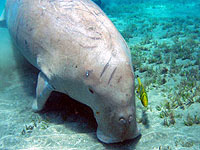
An island community in Thailand works to protect and revive its dugongs
|
|
|
Artificial light is keeping reef fish awake, and the effects may ripple across coral reefs
|

|
|
Arabian Sea humpback whale's long-distance trip
|

|
|
Sao Tome declares first 2 of 8 marine protected areas
|

|
|
First open-ocean subsea human habitat deployed in the US in 40 years
|

|
|
31 New species discovered and described in just 14 days
|

SCUBA News is licensed under a Creative Commons Attribution 4.0 Unported License. This means we are happy for you to reuse our material for both commercial and non-commercial use as long as you: credit the name of the author, link back to the SCUBA Travel website and say if you have made any changes. Most photos though, are copyright the photographer. Please get in touch for details.
Photo credits: Tim Nicholson, Jill Studholme, Kelly Wong Johnson, Pete McGee/CC BY-NC 4.0, DepositPhotos, divebooker.com
UNSUBSCRIBING
Visit {?$optout_link?} to remove yourself from the mailing list. Any problems
contact [email protected].
ADVERTISING
Should you wish to advertise in SCUBA News, please
see the special offers at
https://www.scubatravel.co.uk/newsad.html
Other advertising opportunities are at
https://www.scubatravel.co.uk/diving-advertising.html
CONTACTING THE EDITOR
Please send your letters or press releases to:
Jill Studholme
SCUBA News
The Cliff
DE6 2HR
UK
[email protected]
SCUBA News (ISSN 1476-8011)
Every month we send out a free newsletter featuring the best diving areas, underwater life, diving book reviews and interviews with authors. To receive this please fill in your e-mail address below. For an archive of previous issues see the SCUBA News page.