Reviews: "Love the newsletters! Keep them coming" Janice Fleming...MORE REVIEWS


Scuba News RSS Feed 
SCUBA News 311
(ISSN 1476-8011)
June 2026
Welcome to June's SCUBA News. Whether you're just drying off your gear or already planning your next underwater adventure, we hope this issue brings a little inspiration for the months ahead. As well dive destination ideas, our Creature of the Month is the blue-spotted cornetfish - that placid predator that hunts with octopus, eats lionfish and has a remarkable ability to change colour.
Contents:
What's new at SCUBA Travel?
Liveaboard deals & destinations
The stalking cornetfish is creature of the month
Diving news from around the World
You can download SCUBA News as a pdf.


What's New at SCUBA Travel?
|


Liveaboard Deals and Destinations
We've several offers for you today, including buy one get one free on Maldives liveaboard places.
- Jelajahi Laut, Indonesia SAVE 25%. Six cabins accommodating up to 14 divers. Visiting Lembeh, Gorontalo, Togean, Pulau Dua, Luwuk on an 11 day cruise with 33 dives.
- Princess Dhonkamana, Maldives, SAVE 32%. Nine cabins accommodate 20 guests. Classic Maldives trips.
- Palau Siren, Palau, SAVE 30% on Full Moon Spawning trips. A chance to witness one of the most spectacular natural events - the spawning aggregations of the bumphead parrotfish and the red snapper attractring the biggest predators in Palau such as bull sharks, oceanic blacktip sharks and hammerheads. Plus receive a number of presentations about these unique dives. Get the early bird discount.
- Thailand Master - Myanmar Mergui Archipelago, SAVE 20%, Price from USD 2765 2212. Reefs with huge soft coral covered boulders, mantas and even whale sharks. Garden eels, harlequin and robust ghost pipefish, short pouch pygmy pipehorses and hawksbill turtles.
- Valentina , Mexico, SAVE 10% on Sea of Cortez trips or 7% on Socorro trips. 20 Guests in 10 cabins.

- Emperor Fleet, Maldives, Buy one get one free on Emperor Explore III or Emperor Serenity trips

- Topaz, Red Sea (Egypt), SAVE 45%. Choose Brothers and Elphinstone or Northern wreck and Ras Mohamed.


Bluespotted Cornetfish, Fistularia commersonii, is our creature of the month
As with many fish, the cornetfish has several different names. Whatever you call it, I am talking about the long, tubular fish you see hovering in the waters of the Red Sea, Sea of Cortez and Indo-Pacific. Recently, it has also been seen in the Mediterranean and the Eastern Central Pacific.

Bluespotted Cornetfish, also known as a smooth cornetfish, trumpetfish or flutemouth. Tim Nicholson
A Lionfish-Eating Hunter
A stalking predator, it is one of the few fish which eats the venomous lionfish, ambushing it from from behind. The unlikely-looking hunter also seeks opportunities to hunt alongside other species. For example, an octopus pursues prey into crevices whist the cornetfish floats in the water column waiting for fish to be flushed out. If it takes more than its fair share though, it runs the risk of being punched by the octopus.
Females are bigger than Males
Easily recognised, the cornet fish grows up to 160 cm (five feet) long. Females reach larger lengths and weights than males.
The tail fin has a long filament running off it which is lined with sensory pores which may act as a long-range system for detecting prey.

Can grow to lengths over five feet
Instead of scales the cornetfish has small spines embedded in its skin.
Their reproductive season lasts as long as the water is warm enough at 22oC. In the north it is for six months over the summer, peaking in August. Juveniles often live in a seagrass nursery.
The fish may be solitary or in schools.

Small school of cornetfish. Francescodj/CC BY-NC 4.0 via iNaturalist
Depth-wise they are very wide-ranging, from 1 m to at least 132 m and possibly 296 m.
Cornetfish change colour
Normally F. commersonii is brownish to olive green on top and a lighter silvery colour below, with a pair of blue stripes or rows of dots along its back. However, it can change colours to show a disruptive pattern of dark bands to create false edges and decrease detectability. They can also lighten their colour when going over sand.

Cornetfish at Soma Bay, Red Sea. Louis P B/CC BY-NC 4.0 via iNaturalist
Next time you're on a dive with cornetfish, take a moment to watch their hunting and colour strategies.
Class: Actinopterygii (Ray-finned fishes) > Order: Syngnathiform (also pipefish and seahorses > Family: Fistulariidae > Genus: Fistularia
Sources and References
Lieske and Myers, A Natural Predator of the Lionfish, Pterois miles, Gilad Bernadsky and Denis Goulet, Copeia, Vol. 1991, No. 1 (Feb. 7, 1991), pp. 230-231
Bariche, M. et al (2013). Reproduction of the invasive bluespotted cornetfish Fistularia commersonii (Teleostei, Fistulariidae) in the Mediterranean Sea. Marine Biology Research, 9(2), 169-180. https://doi.org/10.1080/17451000.2012.707322
Ascione, S. J. et al (2026). The state of knowledge on four families of Syngnathoidei fishes (Teleostei: Syngnathiformes): Aulostomidae, Centriscidae, Fistulariidae and Solenostomidae. Journal of Fish Biology, 1-50. https://doi.org/10.1111/jfb.70393
Castillo, M. A., et al (2022). Disruptive coloration and behavior facilitate camouflage of blue-spotted cornetfish against complex coral reef bottoms. Marine Ecology, 43, e12731. https://doi.org/10.1111/maec.12731
Diving news from around the World
|
|
Study shows octopuses' impressive ability to navigate space
|

|
|
The last-ditch plan to save coral reefs from utter destruction
|

|
|
Shark expert says Tony Abbott doesn't understand the science after former PM calls for cull
|

|
|
Plastic food packaging blankets the world's coastlines, study finds
|

|
|
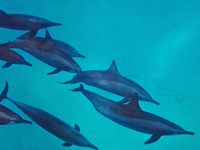
Female dolphins remember who is aggressive when choosing a mate
|

|
|
Human activity can reshape dolphin social lives...
|
|
|
...And those of reef fish
|

|
|
World's deepest banner protest launched at the bottom of the sea
|

|
|
Wind-assisted cargo ships could more than halve shipping emissions
|

|
|
Sesame sea slug species discovered in Taiwan
|

|
|
From sesame seed to Sesame Street
|

SCUBA News is licensed under a Creative Commons Attribution 4.0 Unported License. This means we are happy for you to reuse our material for both commercial and non-commercial use as long as you: credit the name of the author, link back to the SCUBA Travel website and say if you have made any changes. Most photos though, are copyright the photographer. Please get in touch for details.
Photo credits: Tim Nicholson, Jill Studholme, Kelly Wong Johnson, Pete McGee/CC BY-NC 4.0, DepositPhotos, divebooker.com
UNSUBSCRIBING
Visit {?$optout_link?} to remove yourself from the mailing list. Any problems
contact [email protected].
ADVERTISING
Should you wish to advertise in SCUBA News, please
see the special offers at
https://www.scubatravel.co.uk/newsad.html
Other advertising opportunities are at
https://www.scubatravel.co.uk/diving-advertising.html
CONTACTING THE EDITOR
Please send your letters or press releases to:
Jill Studholme
SCUBA News
The Cliff
DE6 2HR
UK
[email protected]
SCUBA News (ISSN 1476-8011)
Every month we send out a free newsletter featuring the best diving areas, underwater life, diving book reviews and interviews with authors. To receive this please fill in your e-mail address below. For an archive of previous issues see the SCUBA News page.