Reviews: "Love the newsletters! Keep them coming" Janice Fleming...MORE REVIEWS

SCUBA News 308
(ISSN 1476-8011)
March 2026
Welcome. This month, we're charting a course from the hammerhead-heavy currents of the Galapagos to the vibrant, coral-fringed pinnacles of Thailand. We also have a curated selection of liveaboard deals alongside a closer look at the stinging beauty of the snakelocks anemone. Plus, stay informed with our roundup of the latest global diving news.
Contents:
What's new at SCUBA Travel?
Dive for less: Up to 50% off Liveaboards
Medusa of the shallows
Diving news from around the World
You can download SCUBA News as a pdf.
Personalised scuba diving itineraries, just for you: choose Turkey or Italy

And not just diving, visit Pompei or other historical sites. Everything tailored to your requirements. Talk to Aldo today, [email protected] or WhatsApp 07713 611206, and plan your perfect trip.


What's New at SCUBA Travel?
|


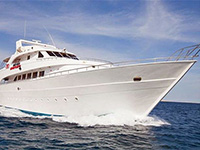
Liveaboard Diving Offers: Dive for Less
Travel feels a little less predictable right now, routes are changing and many are wondering if their flights will be cancelled. A number of boats are offering extra reassurance through flexible rescheduling options or future travel credit if plans need to change. Also, make sure you have travel insurance from the moment you book your flight or liveaboard.
- Alsuraya, Egypt, North Wrecks and Ras Mohammed, Brothers, Daedalus, Elphinstone, SAVE 25%. From wreck routes to deep southern reef systems.

- Belize Aggressor III. SAVE 15 %. Up to 5 dives a day.
- Ariyal, Maldives. HALF PRICE. Drift dives, night dives and pinnacles with manta rays and whale sharks, with 50% off.

- Hatiku. SAVE 30%. Raja Ampat, Lembeh, Siau Island, Pulau Sika (where the dugong lives), Banda Neira Archipelago, The Spices Neira, The Ring of Fire and other fabulous diving areas - there are plenty of options if you book the Hatiku.

- Galaxy Diver II, Galapagos, SAVE 15%, World-class diving adventure amidst a breathtaking array of marine life, including sharks, whales, manta rays, turtles, penguins, iguanas and sea lions.

- Spirit of Freedom, Australia. Ribbon Reef (Great Barrier Reef), Coral Sea, Cod Hole and special route - Horn Island. Trips of 3, 4 and 7 day durations. Advanced Eco-Tourism Accreditation

- Rocio del Mar, Mexico, Socorro Islands, 06 - 15 May Citizen Science expedition led by Adrian Munguia Vega trip. Join a multi-year, groundbreaking expedition to study in-water DNA.


Snakelocks: Medusa of the shallows
The snakelocks anemone is one of the most distinctive invertebrates you'll encounter on a dive in European waters. Its long, sinuous tentacles sway continuously in the current, unable to retract like most other anemones

Snakelocks anemone, Anemonia viridis, in the Mediterranean. Tim Nicholson
The name snakelocks comes from the idea that each tentacle looks like a snake, and that together they look like locks of hair as in the Greek myth of Medusa.
Different colours depending on depth
The most beautiful are green with pink tips to the tentacles. These live in shallow waters with plenty of sunlight. Like corals, their colour is given by symbiotic algae - specifically zooxanthellae - within the anemones' tissues. The algae gain protection and nutrient salts whilst the anemone benefits from organic compounds synthesised by the algae using sunlight as the energy source.
When the anemones are deeper, they have less algae because of the lack of light and these appear a dull dark grey colour.

Grey Snakelocks Anemone with Inachus dorsettensis spider crab. Tim Nicholson
Turn to Face the Sun
Previously only known in plants, new research reveals that on bright days the Snakelocks Anemones track the sun - similar to sunflowers on land. Whilst remaining in one place, they face east at dawn turning towards the sun throughout the day until facing west at dusk. This promotes light absorption to maximise photosynthesis of their algae. They can also, though, on extremely sunny days in rock pools for example, turn away from the sun to reduce the risk of exposure to excessive sunlight.

Snakelocks Anemone, Isle of Man. Jill Studholme
Active Predator
Although they get much nutrition from their algae, they are also carnivores. When a small animal touches a tentacle, it triggers thousands of specialised stinging cells called nematocysts. These inject venom into the unfortunate prey that paralyses or kills it. The tentacles then work together to transport the immobilised animal toward the central mouth.
Safe haven for other species like Shrimps and Crabs
Look closely into the tentacles on your next dive and you'll often find another creature living there. The anemone hosts small spider crabs in the Inachus genus and Periclimenes shrimps within the protective tentacles. Why are these not attacked by the anemone?
Well, the prompt from the anemone to attack is not just mechanical. It also depends on chemical signals. The crustaceans living with the anemones acquire protection by gradually increasing contact with the tentacles. Some crabs even break off parts of the tentacle and attach it to themselves.

Snakelocks anemone, Anemonia viridis, with Periclimes shrimp (can you spot it?). Jill Studholme
Reproduction: The Power of the Clone
You might see dense carpets of the snakelocks anemones. This is because they most commonly reproduce asexually, splitting in half longitudinally and growing into two new anemones.

Carpet of Snakelocks anemones. Charlottewpfmcs/CC BY-NC 4.0
When they reproduce sexually, they don't have free swimming larvae but grow wherever the fertilised egg first lands.
Are they Dangerous?
While beautiful, the Snakelocks is one of the few European anemones capable of penetrating human skin and giving you a nasty sting. In severe cases this causes intense pain and skin lesions which sometimes last for months.
No common treatments - such as vinegar, ammonia or baking soda - work. In fact these provoke a further discharge of stinging cells making everything worse. The immediate treatment is to:
- Remove pieces of tentacles with something rigid, like a credit card
- Rinse well with sea water (not fresh water)
- Make sure the stung area is not exposed to the sun, as this worsens the sting
- Apply ice packs for 15 min, in intervals of 3 min of application and 2 min of rest, covered by a towel or cloth
- Seek medical attention if pain persists
(According to the US National Library of Medicine)
The best way to prevent accidental contact is to always wear protective clothing when diving or swimming around the anemones.
Where to see them
The snakelocks anemone (Anemonia viridis) is permanently attached to hard substrates throughout its range - from the Azores and Mediterranean north to the Irish Sea and Scandinavian waters. You'll find it most abundantly in surge channels, on rocky reefs and in shallow seaweed-rich areas, typically in well-lit water down to around 20 metres.
A Delicacy at Risk
Snakelocks anemones are a delicacy in southern Spain. Known as ortiguillas de mar or little sea nettles, the whole animal is coated in flour and fried in hot oil. However, over-harvesting and expansion of a Pacific invasive brown seaweed (Rugulopteryx okamurae) has left local stocks of the anemone in a critical state, leading to authorities closing the fishery indefinitely.

Ortiguillas de mar are fried snakelocks anemones. Javier Lastras/CC BY-NC 2.0
Another threat to the anemones globally are microplastics. They are particularly at risk due to their proximity to the coastline, non-selective feeding and sedentary habit. The anemones both eat the microplastics and trap them in the mucus of their tentacles. Mucus production has been suggested as a possible stress response which may perform a cleaning and defence. Anemones weakened by bleaching are also more susceptible to microplastics.
Next time you're diving along the west coast of Europe, or the Mediterranean, look out for these interesting creatures.
Phylum: Cnidaria > Subphylum: Anthozoa > Class: Hexacorallia > Order: Actiniaria > Suborder: Enthemonae > Superfamily: Actinioidea > Family: Actiniidae > Subfamily: Anthiinae > Genus: Anemonia > Species: Anemonia viridis
References
Porro, B. et al. The many faced symbiotic snakelocks anemone (Anemonia viridis, Anthozoa): host and symbiont genetic differentiation among colour morphs. Heredity 124, 351-366 (2020).
Landmann, S. et al. Field experiments on individual adaptation of the spider crab Inachus phalangium to its sea anemone host Anemonia viridis in the northern Adriatic Sea. Mediterranean Marine Science 17(2):333-339 (2016).
Georgie Savage, et al. Uptake of microplastics by the snakelocks anemone (Anemonia viridis) is commonplace across environmental conditions, Science of The Total Environment, Volume 836, 2022, 155144,
Naylor P, Great British Marine Animals, 2021.
Diving news from around the World
|
|
Diving Talks 2026 Returns to Lisbon
|

|
|
The hidden cost of fisheries subsidies
|

|
|
This state's power prices are plummeting
|

|
|
Oldest known whale recording could unlock mysteries of the ocean
|

|
|
Stayin' alive: Fish disco could save 90% of marine life from power station
|

|
|
Testing the waters: can pumping chemicals into the ocean help stop global heating?
|

|
|
Tiny Plastics, Green Solutions: How Algae Could Help Clean Polluted Waters
|

|
|
Mass stranding of whales on Scottish beach caused by loyalty to their pod
|

|
|
How loud is clean energy?
|

|
|
Tiny, lost and constipated: what a baby turtle told Australian scientists about warming seas
|

|
|
Surprising daytime spawning in Thailand corals
|

SCUBA News is licensed under a Creative Commons Attribution 4.0 Unported License. This means we are happy for you to reuse our material for both commercial and non-commercial use as long as you: credit the name of the author, link back to the SCUBA Travel website and say if you have made any changes. Most photos though, are copyright the photographer. Please get in touch for details.
Photo credits: Tim Nicholson, Jill Studholme, Kelly Wong Johnson, Pete McGee/CC BY-NC 4.0, DepositPhotos, divebooker.com
UNSUBSCRIBING
Visit {?$optout_link?} to remove yourself from the mailing list. Any problems
contact [email protected].
ADVERTISING
Should you wish to advertise in SCUBA News, please
see the special offers at
https://www.scubatravel.co.uk/newsad.html
Other advertising opportunities are at
https://www.scubatravel.co.uk/diving-advertising.html
CONTACTING THE EDITOR
Please send your letters or press releases to:
Jill Studholme
SCUBA News
The Cliff
DE6 2HR
UK
[email protected]
SCUBA News (ISSN 1476-8011)
Every month we send out a free newsletter featuring the best diving areas, underwater life, diving book reviews and interviews with authors. To receive this please fill in your e-mail address below. For an archive of previous issues see the SCUBA News page.