Reviews: "Love the newsletters! Keep them coming" Janice Fleming...MORE REVIEWS


SCUBA News 307
(ISSN 1476-8011)
February 2026
Happy Lunar New Year!

As we welcome another new year, we're celebrating with a splash of colour from the reef. This issue marks the return of Creature of the Month, and we're looking one of the Red Sea's most striking - and surprisingly under-studied - fish: the Red Sea anthias.
Contents:
What's new at SCUBA Travel?
Dive for less: Up to 50% off Liveaboards
Red Sea Anthias is Creature of the Month
Diving news from around the World
You can download SCUBA News as a pdf.


What's New at SCUBA Travel?
|


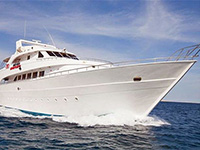
Liveaboard Diving Offers: Dive for Less
Get up to 50% off at some of the best diving spots in the world. Plus, automatically get an extra 5% off any subsequent trip!
- C Echo 2, Egypt, North Wrecks and Ras Mohammed, Brothers, Daedalus, Elphinstone, SAVE 25 %. Maximum of 18 divers on board across 15 cabins for a relaxed, uncrowded experience. Small dive groups (4-5 divers per guide).

- Adelaar, Indonesia. Historic liveaboard with just 4 cabins. Trained by a Belgian master-chef, the onboard chefs Wayan and Made pair aromatic local specialities with global dishes. Visits Raja Ampat and Komodo. Some trips to Komodo begin or end in Bali, so you don't have to book an extra domestic flight.
- Black Manta, Maldives. SAVE 15%. A combination of luxury and adventure in the Maldives.
- Galapagos Sky. SAVE 10%. Galapagos Sky is a small, luxury liveaboard. Unparalleled diving with schooling hammerhead sharks, Galapagos sharks, and large pods of dolphin

- Seatopia, Thailand. Explore the Andaman Sea's most spectacular sites.

- Navis I, Philipines. Spacious catamaran visits the magnificent Apo Reef, the globally acclaimed dive spots of Coron and El Nido, and the UNESCO World Heritage-listed Tubbataha Reef.

- Felicity, Maldives. SAVE 50%. The Felicity is full of character. There are 7 cabins with private en-suite bathrooms and air-conditioning for 10-14 guests. The large open deck has ample space for relaxing. There is a covered outdoor dining area where meals are served family-style and an outdoor lounge. The boat's bow has loungers for sun lovers to soak up the rays. Indoors is an air-conditioned lounge and dining area. Read our article about whaleshark research on the Felicity or book now.


Red Sea Anthias is Creature of the Month
With its vivid colours and elusive habits, the Red Sea anthias (Pseudanthias taeniatus) is one of the region's most eye-catching yet least understood reef fish. February's creature of the month, this striking species is instantly recognisable once you know what to look for - though the dramatic differences between males and females can easily fool even experienced divers.

Male Red Sea Anthias, Pseudanthias taeniatus, in Dahab. Jill Studholme
The male and female fish look very different. Where the male is tomato red with white stripes, the female is golden. She looks, at first glance, a little like the much more common lyretail anthias but without the violet streak from eye to cheek.

Female Red Sea Anthias. Francois Libert/CC BY-NC-SA 4.0
All born female
All Red Sea anthias are born female, and all have the ability to transition into males. They live in a harem structure with one male and many females. When the male dies, the dominant female starts the transition. This sex change can take as little as two weeks, but may take longer. As the female transitions, she will start to display more intense colours and develop longer fins. She also becomes more aggressive, chasing other females.

Female Red Sea Anthias transitioning to a male. Frank Krasovec/CC BY-NC-SA 4.0
Where to look for them
They are widely thought to only live in the Red Sea, and even there only in the north. But there has been an unconfirmed sighting in India.
Occasionally they are as shallow as 10 m, but you more often find them between 20 and 40 m. They hover in the water, eating small zooplankton. Pseudoanthias species tend to prefer areas with currents - outer reef slopes and drop-offs - which deliver a stream of plankton for them to eat. To photograph them then, try heading with the current towards them to capture their face or profile.

Head on. Jill Studholme
These lovely fish are not well studied - if you've spotted one - tell us.
Class: Actinopterygii > Order: Perciformes > Suborder: Percoidei > Family: Serranidae > Subfamily: Anthiinae > Genus: Pseudanthias > Species: Pseudanthias taeniatus
References
Field and Field, Reef Fish Of The Red Sea
Khilesh K.V. et al, Checklist of serranid and epinephelid fishes (Perciformes: Serranidae & Epinephelidae) of India, Journal of the Ocean Science Foundation. 2021, Volume 38
Diving news from around the World
|
|
Scientists discover a new whale highway
|

|
|
Why so many mangrove restoration projects fail
|

|
|
Shark-repellent could reform fisheries by curbing bycatch
|

|
|
Corals in extreme coastal bays show greater resilience to climate stress
|

|
|
Flagship whales facing climate-driven decline in Australia
|

|
|
Research helps lobster hatcheries safeguard genetic diversity
|

|
|
Urban light pollution alters night-time hormones in sharks
|

|
|
Blind, slow and 500 years old - or are they? How scientists are unravelling the secrets of Greenland sharks
|

|
|
Tests uncover unexpected humpback sensitivity to high-frequency noise
|

|
|
The collapse of Atlantic cod in the Oslofjord, Norway
|

|
|
Study Tracks Tiger Sharks to Maui Mating Hub
|

SCUBA News is licensed under a Creative Commons Attribution 4.0 Unported License. This means we are happy for you to reuse our material for both commercial and non-commercial use as long as you: credit the name of the author, link back to the SCUBA Travel website and say if you have made any changes. Most photos though, are copyright the photographer. Please get in touch for details.
Photo credits: Tim Nicholson, Jill Studholme, Kelly Wong Johnson, Pete McGee/CC BY-NC 4.0, DepositPhotos, divebooker.com
UNSUBSCRIBING
Visit {?$optout_link?} to remove yourself from the mailing list. Any problems
contact [email protected].
ADVERTISING
Should you wish to advertise in SCUBA News, please
see the special offers at
https://www.scubatravel.co.uk/newsad.html
Other advertising opportunities are at
https://www.scubatravel.co.uk/diving-advertising.html
CONTACTING THE EDITOR
Please send your letters or press releases to:
Jill Studholme
SCUBA News
The Cliff
DE6 2HR
UK
[email protected]
SCUBA News (ISSN 1476-8011)
Every month we send out a free newsletter featuring the best diving areas, underwater life, diving book reviews and interviews with authors. To receive this please fill in your e-mail address below. For an archive of previous issues see the SCUBA News page.