Reviews: "Love the newsletters! Keep them coming" Janice Fleming...MORE REVIEWS

SCUBA News 295
(ISSN 1476-8011)
February 2025
~~~~~~~~~~~~~~~~~~~~~~~~~~~~
SCUBA News (ISSN 1476-8011)
Issue 295 - February 2025
https://www.scubatravel.co.uk
~~~~~~~~~~~~~~~~~~~~~~~~~~~~~
Welcome to SCUBA News - thank you for all your suggestions for future issues, keep them coming. [email protected].
Contents:
What's new at SCUBA Travel?
Creature of the Month: The extraordinary Dragon Seamoth
5 Fabulous liveaboard diving deals - save up to 50%
Diving news from around the World
You can download this SCUBA News issue as a pdf.


What's New at SCUBA Travel?
|
|
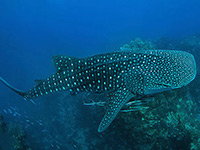
There are some great dive highlights to enjoy during April, including making the most of the Maldives before the wet season begins. Seychelles boats can reach remote spots and it's a good month for whale sharks in Belize and Ningaloo Reef.
|
|
|
Malaysia is in the coral triangle4 and has some of the best diving in the world. Find the best dive shops with new reviews.
|

|
|
Beyond Coral: A Diver's Guide to Unique Reefs Coral reefs often dominate discussions about top dive sites, but they are far from the only fascinating reef structures divers can explore. Others including granite, volcanic, rocky and wrecks provide incredible opportunities for divers to encounter diverse marine life and stunning landscapes.
|

5 Fabulous Liveaboard Deals - Save up to 50% this year
More great liveaboard diving deals, to some of the best diving destinations in the world, specially selected for us by Divebooker.com, the liveaboard specialists.
- Ilike, Indonesia. SAVE 50% on Maluku, Banda Sea and Komodo, or 25% on Raja Ampat. 14, 13, 12, 11, 8 or 7 night trips.

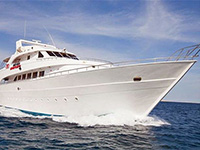
- Serenity, Red Sea SAVE 15%, prices from just £401! to reefs and wrecks including the Thistlegorm and the wrecks of Abu Nuhas: Ghiannis D, Carnatic, Chrisoula K, and Kimon M. This steel built boat sleeps 22.
- Turks & Caicos Explorer II, SAVE $800. Reef sharks, white tip and black tip sharks plus tigers sharks are a frequent guest of this destination. Turtles and mantas can be seen here almost all year round.

- Oceana, Papua New Guinea, up to 25% off this trip of a lifetime. Dive sites are still uncrowded with dramatic volcanically formed reefscapes, oodles of fish, sharks and corals. Occasionally orca, pilot whales and whale sharks pass by. Sleeps 16 divers.

- Sea Star, Seychelles, SAVE 10%. Discover the islands' hard-to-reach places.


Creature of the Month: Dragon Seamoth
The Little Dragon of the Sea
The Dragon Seamoth (Eurypegasus draconis) is an extraordinary creature.

The Dragon Seamoth is also known as the Little Dragonfish. Jill Studholme
A Walking Fish?
Unlike most fish, the dragon seamoth moves in a rather peculiar way - it walks. Using its fan-like pectoral fins, it slowly creeps across the seafloor, only occasionally using its large pectorals to 'fly'.
A Suit of Armour
It's body is encased in a hard armour. With its rough texture and colour, it looks like it's covered in fragments of shells or sand, making it incredibly difficult to spot.
Another remarkable feature of the dragon seamoth is its ability to shed its skin in one piece every one to five days. This keeps it clean, removing algae and small invertebrates that accumulate on this slow-moving fish. This process also helps with camouflage by allowing it to regenerate new skin with colour changes.

The seamoth uses its long snout to hoover up small crustaceans and other tiny animals. Jill Studholme
Monogamous Pair Bonds
The seamoth is not only intriguing in appearance but also in behaviour. Unlike many fish species, it practices monogamous pair bonding, meaning that once it finds a mate they stay together. This social structure likely evolved to ensure reproductive success in these low-density populations; just one pair is found per 325-477 sq m of suitable habitat. The same pair mate repeatedly, but show neither parental care nor site fidelity.
Single animals take a long time to find a partner, as sother seamoths are faithful to their partners and live at low densities.
You can tell males and females apart as when disturbed males flash a blue-white margin on their pectoral fins, possibly as a warning signal.
Deep and Shallow
The dragon seamoth has been seen as shallow as 3 m, but they are more commonly found in deeper water (37 to over 90 m). It thrives among seagrass beds and algae-covered environments.
A Hidden Gem of the Ocean
The rarely-seen dragonfish seamoth remains elusive. but the next time you find yourself diving in the warm waters of the Indo-Pacific, on seagrass beds or sandy bottoms, keep an eye on the seafloor - you might just spot a tiny dragon on a slow march across the sand.
References
Herold & Clark. Monogamy, spawning and skin-shedding of the sea moth, Eurypegasus draconis (Pisces: Pegasidae). Environ Biol Fish 37, 219-236 (1993).
Nadir M. Al Abri1 et al. The short dragonfish Eurypegasus draconis (Linnaeus, 1766) in the Sea of Oman. Bulletin of Fish Biology Volume 20 04.07.2021 1-6
Marivic G. Pajaro et al. Biology, fishery and trade of sea moths (Pisces: Pegasidae) in the central Philippines. Oryx. 2004;38(4):432-438.
Amanda C. J. Vincent. Trade in pegasid fishes (sea moths), primarily for traditional Chinese medicine. Oryx. 1997;31(3):199-208. doi:10.1046/j.1365-3008.1997.d01-12.x
Diving news from around the World
|
|
From Ocean to Plate: Easy Ways to Choose Sustainable Seafood
|

|
|
Safely choosing a Red Sea liveaboard: New guidelines
|

|
|
Solo Traveller? 11 Easy Ways to Connect on Your First Liveaboard
|

|
|
Divers for Climate survey
|

|
|
Turtles use magnetic map and compass to find food
|

|
|
Deep songs let some baleen whales avoid killer whales
|

|
|
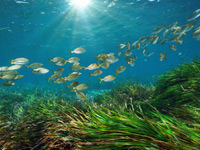
Seagrass meadows as natural climate protectors
|
|
|
Study suggests algal blooms disorient whales, putting them in danger
|

|
|
Diving Fatalities and Medical Conditions
|

|
|
Are dolphins at risk from plastics in rain?
|

|
|
Marshall Islands 1st marine sanctuary covers 8500 square miles
|

|
|
Protect dive sites to increase economic prosperity by $2 billion, says new study
|

SCUBA News is licensed under a Creative Commons Attribution 4.0 Unported License. This means we are happy for you to reuse our material for both commercial and non-commercial use as long as you: credit the name of the author, link back to the SCUBA Travel website and say if you have made any changes. Most photos though, are copyright the photographer. Please get in touch for details.
Photo credits: Tim Nicholson, Jill Studholme, Tatiana Ivkovich, Rob Atherton/DepositPhotos, divebooker.com.
UNSUBSCRIBING
Visit {?$optout_link?} to remove yourself from the mailing list. Any problems
contact [email protected].
ADVERTISING
Should you wish to advertise in SCUBA News, please
see the special offers at
https://www.scubatravel.co.uk/newsad.html
Other advertising opportunities are at
https://www.scubatravel.co.uk/diving-advertising.html
CONTACTING THE EDITOR
Please send your letters or press releases to:
Jill Studholme
SCUBA News
The Cliff
DE6 2HR
UK
[email protected]
SCUBA News (ISSN 1476-8011)
Every month we send out a free newsletter featuring the best diving areas, underwater life, diving book reviews and interviews with authors. To receive this please fill in your e-mail address below. For an archive of previous issues see the SCUBA News page.